Crochet guide
What Is a Yarn Bowl — and Do You Actually Need One?
The problem a yarn bowl solves
Every crocheter knows the scene: the yarn ball rolls off the sofa, under the table, collecting dust and cat hair while unwinding into chaos. A yarn bowl is a weighted bowl with a curled groove cut into its side — the ball sits inside, the working yarn feeds through the groove, and the ball spins in place instead of travelling across your floor.
How the groove works
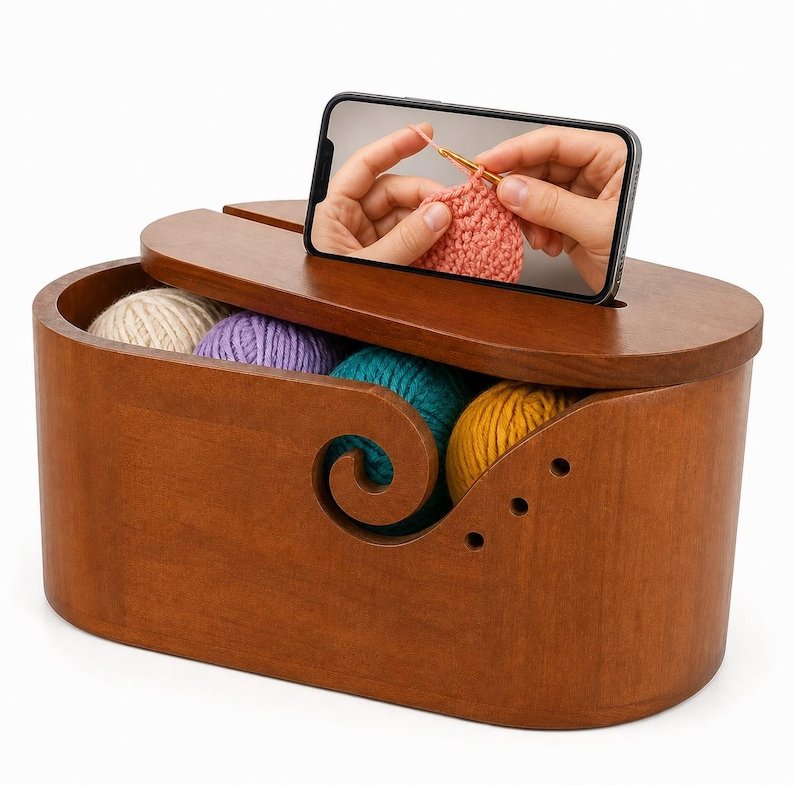
The curl matters more than it looks: a J-shaped or spiral groove lets you drop the yarn in from the top and keeps it feeding smoothly at any angle, while letting you lift it out instantly when you switch skeins — no re-threading. Bowls with additional small guide holes let you run two or three strands (for colorwork or held-double projects) without them twisting around each other.
Wood vs ceramic yarn bowls
Ceramic bowls are heavy and beautiful but chip and crack — and one rough spot in the groove will snag every meter of yarn that passes through it. Wooden yarn bowls are lighter, warmer to the touch, and effectively unbreakable in normal use; a well-sanded, polished hardwood groove is the gentlest surface yarn can run over. For a working tool rather than a shelf ornament, wood usually wins.
Features worth paying for
- A polished, snag-free groove — the single most important quality
- Guide holes for multi-strand work and colorwork
- A lid — keeps dust and pets out of your yarn between sessions
- Real size — small bowls can't hold a full skein; look for 25 cm+ length
- Extras that earn their space, like a lid slot that doubles as a phone stand for following video tutorials hands-free
So — do you need one?
If you crochet a few times a year, a clean mixing bowl does the job. If you crochet weekly, a proper yarn bowl removes a small friction from every single session — and like all good tools, it disappears into the workflow until you try working without it. It's also the classic can't-go-wrong gift for the crocheter who has every hook already.